Home/治療最適化のベネフィットに重点を置いた STRONG-HF 試験

治療最適化のベネフィットに重点を置いた STRONG-HF 試験

Latest Perspectives
Publications
STRONG-HF
CTL-Apr-newsltter-banner

主要アウトカム

現在の心不全患者は、
退院後の再入院および
死亡率が高い1-4

レポートの概要をダウンロード

心不全の負荷

6430万人
全世界における成人の心不全患者数 1

患者の4人に1人は退院後 30日以内に再入院する 1,2,3


患者の約2人に1人の患者は、6ヵ月以内に再入院する 4


患者の2人に1人以上は5年以内に死亡し、生存率は以下の疾患より低い:

  • 大腸癌
  • 乳癌
  • 前立腺癌 1

退院後管理の課題とは

多くの急性心不全患者は、診療間隔が
長い等の問題もありGDMTの
至適用量 5-11 で治療を受けていない。


ACEi、ARB、MRA、β遮断薬は生存率
改善のエビデンスを有する。12

GDMT(診療ガイドラインに基づく標準的治療)を最適に行うための課題。13

医師:
  1. 認識が不足している
  2. 症状の治療に重点を置いている
  3. 有害事象に対する懸念
患者
  1. 年齢の問題
  2. フレイルおよび感受性
  3. 忍容性および禁忌
医療以外:
  1. 高いコスト
  2. アクセスが限定的である

STRONG-HF 試験の主要評価項目
において、全死亡または急性心不全による
再入院が有意に減少することが示されている

試験デザイン
1,078
人の患者が登録
された

目標症例数1800人
18-85
87
施設
14
ヵ国

通常治療での継続が非倫理的と考えられたため試験モニタリング委員会が
試験早期終了を推奨した。

NT-proBNP バイオマーカー値の測定は、
STRONG-HF 試験における治療戦略のために不可欠である。

結果

強化療法群:死亡または心不全再入院に関して
34%の 相対リスク および 8.1%の絶対リスク低減(ARR)14

心血管死
26% 減少

心不全による再入院
44% 減少

全死亡
16% 減少
STRONG-HF試験の結果は、急性心不全患者に対してプロトコルに基づいた
up-titration戦略を実行することで明らかな恩恵を与えること示した。

Home/STRONG-HF Trial highlighting benefits of treatment optimisation

STRONG-HF Trial highlighting benefits of treatment optimisation

Latest Perspectives
Publications
STRONG-HF
Laptop showing an illustration of doctors standing around a heart, discussing diagnosis and treatment for heart failure, on a grey banner background. Text to the left read "STRONG-HF; contemporary post-discharge management in heart failure


Four doctors wearing white coats standing around a large model of a human heart. Speech bubbles from the doctors include illustrations of a checklist, DNA, pills and an ECG.
Text reading:" Strong-HF contemporary post-discharge management in heart-failure."

Primary outcomes

Heart failure patients currently have high rates of readmission and mortality after discharge1-4

DOWNLOAD THE REPORT SUMMARY

Sign up for the Master Pack to unlock exclusive insights from Prof Mebazaa, the principal investigator of the STRONG-HF study.

The burden of heart failure

64.3 million adults suffer from heart failure1
Outline of 4 people, 3 in light brown colour and 1 in red.

1 in 4 patients are re-admitted within 30 days of discharge1,2,3


Outlines of 4 people, 2 in light brown colour and 2 in red.

About 1 in 2 patients are re-admitted within 6 months4


Outline of 4 people, 2 in light brown colour and 2 in red.

More than 1 in 2 patients die within 5 years with survival rates worse than:

  • colon cancer
  • breast cancer
  • prostate cancer1

What are the challenges of post-discharge management?

Majority of heart failure patients are not closely monitored or treated with optimal doses of GDMT5-11 after acute heart failure admission.

Person putting one hand to their chest next to a magnifying glass with a heart symbol inside it. A pill bottle with a downward arrow next to it.

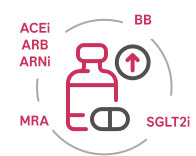
ACEis, ARBs, MRAs and beta-blockers showed to improve survival rates.12

A pill bottle with an upward pointing arrow next to it. The text: ACEi, ARB, ARNi, MRA, SGLT21 and BB is written in a circle around the bottle.

Factors influencing limited adherence to GDMT (Guideline Directed Medical Therapy).13

Physician:
  1. Lack of awareness
  2. Focus on treating symptoms
  3. Fear of adverse effects
Patient:
  1. Age
  2. Frailty and sensitivity
  3. Intolerance and contraindications
Non-medical:
  1. High costs
  2. Limited access

STRONG-HF primary outcomes show significant reduction of all cause death or acute heart failure readmissions

Study Design

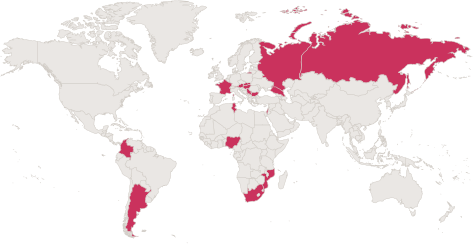
1,078 patients enrolled out of planned 1800, age 18-85 years old from 87 hospitals in 14 countries
1,078
patients enrolled
out of planned 1800
18-85
years old
87
hospital
14
countries

Monitoring board of the study recommended to terminate the study early as it was considered unethical to continue with usual care.

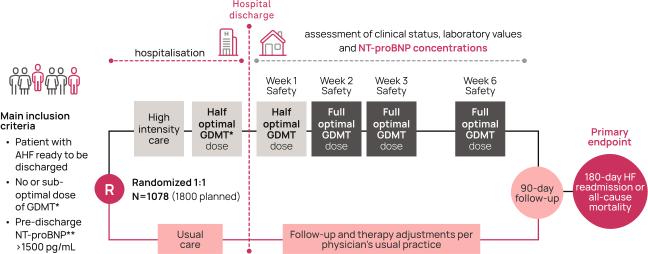
Randomized study of 1078 HF patients with main inclusion criteria of: Patient with AHF ready to be discharged, no or sub-optimal dose of GDMT and pre-discharge NT-proBNP of >1500pg/mL. Half of the sample patients undergo high intensity care, half undergo usual care. 
Under high intensity care, patients are given controlled GDMT of half optimal dose 1 week before and after discharge, and full optimal GDMT dose from week 2 to week 6 post-discharge. 
The other half undergoes usual care of follow-ups and therapy adjustments per physician’s usual practice. Both groups undergo a 90-day follow up. At the endpoint of the study at 180 days after discharge, the number of HF patients readmitted or all-cause mortality is recorded.

*ACEi/ARB, ARNi, BB, or MRA; **NT-proBNP criteria for persistent congestion ACEi, angiotensin-converting enzyme inhibitors; AHF, acute heart failure; ARB, angiotensin receptor blockers; BB, beta blockers; GDMT, guideline-directed medical therapy; HF, heart failure; MRA, mineralocorticoid receptor antagonists; NT-proBNP, N-terminal pro b-type natriuretic peptide

Measuring NT-proBNP biomarker levels is an integral part of the treatment strategy in STRONG-HF.

Results

The high intensity care group: 34% relative and 8.1% absolute risk reduction (ARR) in the combination of death or heart failure readmission.14

A bar graph showing a downward trend.
CV (cardiovascular) death
26% lower

HF readmission
44% lower

All-cause death
16% lower
STRONG-HF study & trial results demonstrated clear benefits for acute heart failure patients by adapting the strategy of care.