Home/Education & CME/hs-TnTの0h/1hアルゴリズムを用いた急性胸痛患者の早期トリアージ

hs-TnTの0h/1hアルゴリズムを用いた急性胸痛患者の早期トリアージ

Education & CME
カテゴリーなし
臨床症例
case-1

Key Takeaways

  • 迅速な高感度トロポニンT(hs-TnT)の0h/1hアルゴリズムは、急性心筋梗塞(AMI)を速やかにルールアウトする上で役立ちます。
  • hs-TnT値をGRACEスコアおよび心電図(ECG)と組み合わせると、その後の死亡リスクが低いかどうかを予測する上で役立ちます。
  • hs-TnTの0h/1hアルゴリズムを用いたAMIの早期ルールアウトは、侵襲的な血管造影の使用を減らし、費用や医療資源の利用を減らす上で役立ちます。
48
Clinical case 1

What is the diagnosis of this case?

.hidecontent { display:none; } setTimeout(function(){ $(document).ready(function() { $(“.readmorebtn”).find(‘a’).click(function() { $(“.hidecontent”).show(); $(“.readmorebtn”).hide(); }); }); }, 3000);

推奨される手順

確立されたリスクスコア(例:GRACE 2.0スコア)のいずれかに基づいてリスクを層別化します(エビデンスレベル IB)。

心エコー検査(エビデンスレベル IC)およびマルチスライスCT検査(エビデンスレベル IIaA)により鑑別診断評価をします:「筋骨格系由来または不安定狭心症など」

症状の訴えのない患者では、攣縮性狭心症などの特別な状況を除き、モニタリングは不要です(エビデンスレベル IIbC)。

患者に症状がなく、リスクパラメータを1つも示さない限り、ルーチンの侵襲的冠動脈造影の適応とはなりません。

退院が可能で、外来時にストレス試験(エビデンスレベル IA)および冠動脈CT検査を含む精密検査を行います。

結論

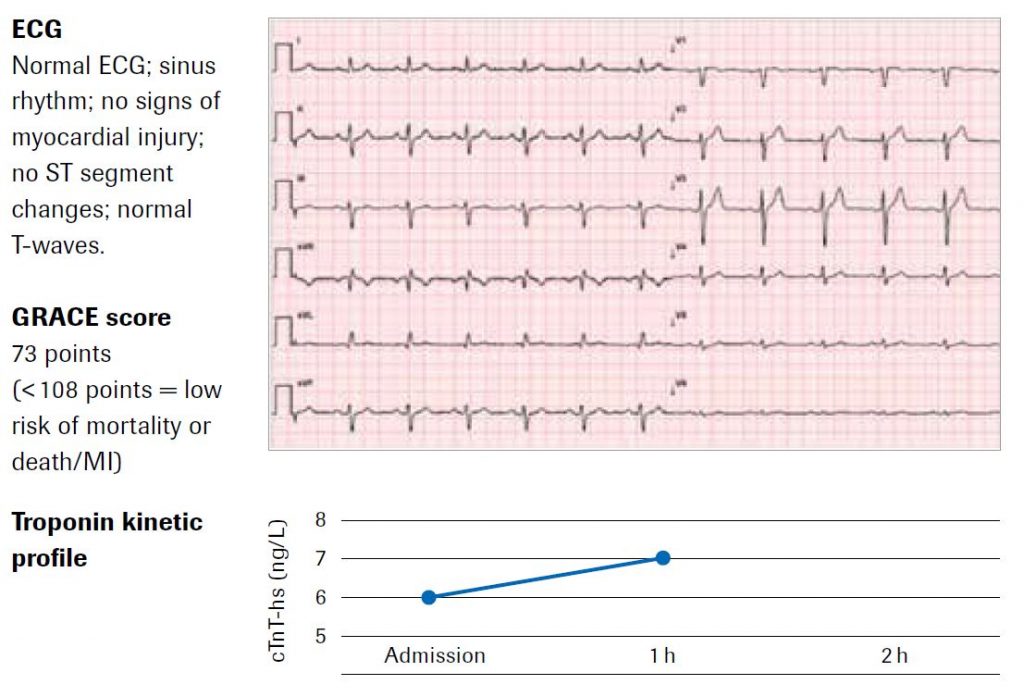
欧州心臓病学会(ESC)の2015年版ガイドラインの基準によると、0h/1hアルゴリズムを用いることで、非ST上昇型心筋梗塞(NSTEMI)をルールアウトできます(初期トロポニン値が12 ng/L未満で、1時間以内に上昇が

著者の見解

迅速な意思決定のために早期診断が必要な場合、cTnT-hsを用いた0h/1hアルゴリズムの方が、標準的な0h/3hまたは0h/6hアルゴリズムよりも推奨されます。
Home/Education & CME/hs-TnT 0h/1h 알고리즘으로 급성 흉통 환자들의 조기 병기 분류

hs-TnT 0h/1h 알고리즘으로 급성 흉통 환자들의 조기 병기 분류

교육 & CME
임상 사례
case-1

Key Takeaways

  • hs -TnT 신속 0h/1h 알고리즘은 급성 심근경색(acure myocardial infarction, AMI)을 신속하게 배제하는 데 도움이 됩니다.
  • hs-TnT 값을 GRACE 점수 및 ECG와 결합하면 향후 낮은 사망 위험을 예측하는 데 도움이 됩니다.
  • hs-TnT 0h/1h 알고리즘을 사용한 AMI의 조기 배제는 침습적 혈관조영술 사용을 줄이고 비용을 절감하며 의료 자원 이용을 줄이는 데 도움이 됩니다.
48
Clinical case 1

What is the diagnosis of this case?

권장 절차

GRACE 2.0 점수(증거 수준 IB)와 같은 확립된 위험 점수 중 하나에 기반한 위험 층화

심초음파(증거 수준 IC)와 다중 절편 CT 스캔(증거 수준 IIaA)으로 감별 진단 평가: (근골격계 또는 불안정 협심증 등)

특별한 상황(예: 혈관경축성 협심증[증거 수준 IIbC])을 제외하고, 증상호소가 없는 환자들에서 모니터링은 필요하지 않습니다.

환자가 증상이 없고 위험 매개변수를 보이지 않는 경우, 통상적인 침습적 관상동맥조영술은 필요하지 않습니다.

스트레스 테스트(증거 수준 IA) 및 관상 동맥 CT 스캔을 포함한 퇴원 및 외래 환자 정밀 검사

결론

2015년 유럽 심장학회(European Society of Cardiology, ESC) 지침의 기준에 따르면, 0/1시간 알고리즘을 이용하여 비ST분절상승 심근경색증(non-ST elevation myocardial infarction, NSTEMI)를 배제할 수 있습니다(1시간 내에 3 ng/L 미만의 상승을 보이는 12 ng/L 미만의 정상 최초 트로포닌 수치). ECG와 GRACE 점수에 기반하여, 위험은 낮은 것으로 추정됩니다(

저자 의견

신속한 의사 결정을 위해 조기 진단이 필요한 경우 항상 cTnT-hs를 이용한 0/1시간 알고리즘을 표준 0/3시간 또는 0/6시간 알고리즘보다 우선적으로 사용해야 합니다.

Home/Education & CME/Early triage of patients with acute chest pain with hs-TnT 0h/1h Algorithm

Early triage of patients with acute chest pain with hs-TnT 0h/1h Algorithm

Clinical Cases
Cardiology CME/CE Webinar
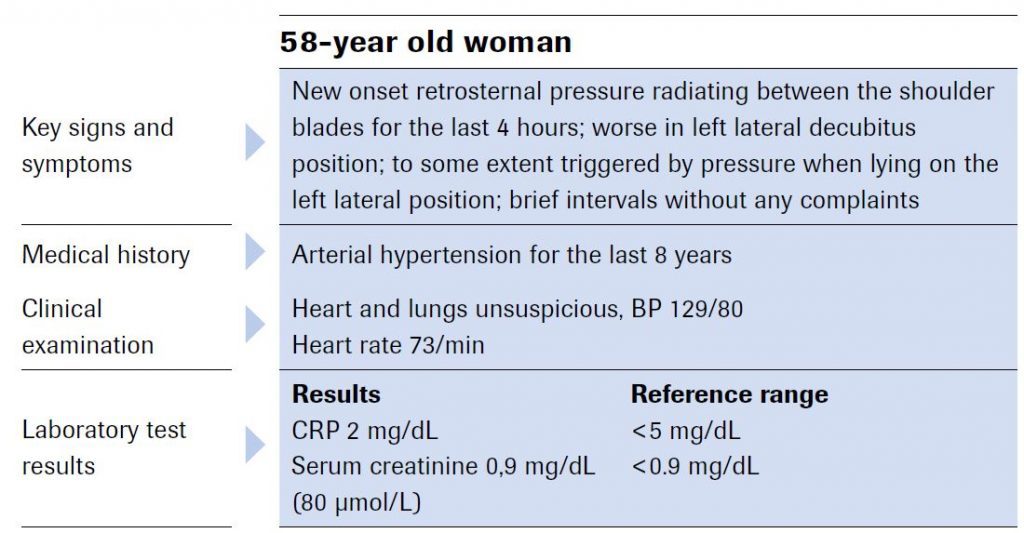
ECG, grace score and Troponin kinetic profile of 58-year old patient with acute chest pain, in front of a white open book, with a red backdrop.

Key Takeaways

  • hs -TnT rapid 0h/1h algorithm helps to rapidly rule out AMI
  • Combining hs-TnT values with GRACE scores and ECG helps to predict a low risk of subsequent mortality
  • Early rule out of AMI with hs-TnT 0h/1h algorithm helps to reduce the use of invasive angiography and reduce cost and health care resource utilization
48
Clinical case 1

What is the diagnosis of this case?


Risk stratification based on one of the established risk-scores e.g., GRACE 2.0 score (evidence level IB)

Differential diagnostic assessment by echocardiography (evidence level IC) and multi-slice CT-scan (evidence level IIaA): (musculoskeletal origin or unstable angina, etc.)

In patients without complaints no need for monitoring except in special situations, e.g., vasospastic angina (evidence level IIbC)

No indication for routine invasive coronary angiography, as long as the patient is without symptoms and does not present any risk parameters

Possible discharge and outpatient workup including stress testing (evidence level IA) and coronary CT-scan

Conclusion

According to the criteria of the 2015 ESC guidelines, using the 0/1-hour algorithm, NSTEMI can be ruled out (normal initial troponin level <12 ng/L with a rise <3 ng/L within 1 hour). Based on the ECG and GRACE score the risk is estimated to be low (<108 points). Outpatient workup to investigate the differential diagnosis and stress testing before or within a few days after discharge are recommended.

Author’s opinion

Whenever early diagnosis is required for rapid decision making, the 0/1-hour algorithm using cTnT-hs should be preferred to the standard 0/3-hours or 0/6-hours algorithms.

References

  1. Thygesen K, Mair J, Giannitsis E, et al. How to use high-sensitivity cardiac troponins in acute cardiac care. Eur Heart J 2012; 33:2252–7.
  2. Reichlin T, Hochholzer W, Bassetti S, et al. Early diagnosis of myocardial infarction with sensitive cardiac troponin assays. N Engl J Med 2009;361:858–67.